
Arboviral Encephalitides
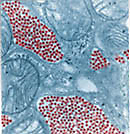
In simple terms, arborviral refers to a disease that is transmitted by an arthropod such as a mosquito to a host, usually a human, bird or animal.
Encephalitis, found in various forms such as St. Louis, Western Equine, LaCrosse, and Eastern Equine, is endemic to the United States and increasing in incidence. Some of these encephalitides, like Eastern Equine Encephalitis (EEE), are becoming more serious in their effects on humans, horses and birds.
Western Equine | Eastern Equine | St. Louis | La CrosseWhat is Western Equine Encephalitis?
Western Equine Encephalitis is often considered the Western version of Eastern Equine Encephalitides.
First discovered in California, Western Equine Encephalitis (WEE) was considered a disease found mainly in the western areas of North America. Recently, however, reports of the disease are appearing in areas outside of the initial regions. As one of the diseases farmers get, WEE is prevalent in agricultural areas.
Farming regions that have increased their irrigation practices are contributing to the disease’s spread.
Transmission
As with Eastern Equine Encephalitis, birds are the disease’s main host reservoir. However with WEE, the mosquito Culex pipiens tarsalis is the main vector of this disease. Small mammals are less common host reservoirs of WEE.
Symptoms
Like Eastern Equine Encephalitis, the most common symptoms of the disease are flu-like in nature, with head and muscle aches, fever and nausea.
Most occurrences of the disease are not serious, however, in some instances, WEE can result in Encephalitis or Meningitis, especially in children younger than one year of age. These children suffer more critical cases of the disease than adults do, yet only about 3% of the cases result in death.
Some young survivors of the disease, however, may end up with permanent neurological damage.
Horses can fall victim to the disease, however, there is a vaccine to prevent this for horses. As an easy prevention measure, these are vaccines horses should get. As with EEE, there is no vaccine for humans at present. Therefore, an effective mosquito control system is necessary to offer protection against mosquitos and the mosquito-borne diseases they carry.
[back to top]What is Eastern Equine Encephalitis?
Eastern Equine Encephalitis, commonly referred to as EEE, is a vector disease transmitted by mosquitoes to humans and horses.
Those who work in the outdoors and those who live close to the freshwater swamps along the eastern U.S., Great Lakes areas, and Gulf Coast states are in prime habitat areas for EEE-transmitting mosquitoes. Caution should be taken if traveling to an endemic area.
There are certain variables that come into play when looking at EEE in people. Age does seem to play a role in the severity of the disease, with adults over 50 years of age and children under 15 being the hardest hit.
Although there is a vaccine for horses, at present, there is no vaccine for humans.
Transmission
EEE is maintained in nature through a cycle between the Culiseta Melanura mosquito and birds that live in freshwater swamps.
Although Culiseta Melanura do not bite humans, other mosquitoes, such as Aedes aegypti, Culex pipiens, and Coquillettidia perturbans will "cross bite“ – bite an infected bird and then bite a human or animal (horse, emu, and other exotic birds) – thereby spreading the disease. Known as bridge vectors, they may take a meal from a bird and later take another meal from a mammal, transmitting the disease from one host to another.
Since EEE is one of the diseases horses get from the bite of a mosquito, a horse vaccine has been made. At present, there is not a vaccine for humans. An effective mosquito control system can offer protection against mosquitoes and the mosquito-borne diseases they carry.
It should be noted that horses do not transmit the disease to humans, nor can people spread the disease to others.
Symptoms
Although not everyone who has been infected with the EEE virus develops symptoms, for others the illness can be quite devastating. Symptoms usually occur within 2-10 days after being bitten by an infected mosquito.
These symptoms include high fever, stiff neck, headache, confusion, and lethargy. Encephalitis, swelling of the brain, is the most dangerous symptom.
EEE has a 30% - 60% mortality rate once contracted. Severe damage to the central nervous system occurs in about half of those that survive the illness.
[back to top]What is St. Louis Encephalitis?
St. Louis Encephalitis (SLE), one of several arboviral encephalitides, is related to West Nile Virus and is spread by the bite of the Culex pipiens mosquito.
Found mainly in the Southeastern and Midwestern regions of the United States, particularly in late summer to early fall, it is also present in other areas of North America and South America.
Transmission
Birds appear to be the reservoir host of the disease. The transmission occurs when the mosquito, the Culex pipiens mosquito, bites an infected bird and then transfers the disease from the infected bird to a human when it extracts a blood meal from the human.
The bite of a mosquito can not only be annoying, it can also result in a very serious illness, if the disease is transmitted through the bite.
Symptoms
Do I have Encephalitis? This disease usually does not cause serious illness, and some of those infected do not exhibit symptoms. When diagnosing Encephalitis, most symptoms resemble the flu, including head and muscle aches, fever and nausea.
However, if the disease does become more severe, prompt medical attention is imperative. Encephalitis and meningitis can develop in more serious cases.
Unfortunately, death can result from delayed treatment or lack of treatment, particularly in older persons where fatality rates can reach up to 30%. Therefore, diagnosing Encephalitis sooner is certainly better than later, so seek medical treatment if you suspect you have Encephalitis. There is no vaccine for this disease at the present time.
[back to top]What is LaCrosse Encephalitis?
Named for the Wisconsin location where it was discovered in 1963, LaCrosse Encephalitis (LAC) is transmitted by Ochlerotatus triseriatus, more commonly known as the eastern tree-hole mosquito.
Found in the Upper Midwest, particularly in or near forests and wooded areas, it has recently been reported in the Southeastern and Mid-Atlantic states here in the U.S. with increasing frequency.
Children 15 years of age and younger are most likely to be victims of LAC. Horses are not affected by this encephalitis disease.
Transmission
The reservoir hosts of LAC, unlike other encephalitis diseases, are small animals including field mice, chipmunks and squirrels.
After the mosquito bites one of these small animals harboring the disease, she then transmits the disease via her bite to another warm blooded mammal. In many cases, it is often a human who is the recipient of the mosquito’s bite.
Encephalitis Symptoms
Most people infected by the disease just exhibit flu-like symptoms. The symptoms of encephalitis include head and muscle aches, nausea and fever. Although this disease is not usually fatal, serious illness can result from it, especially among children age 15 and under.
In the more serious cases, symptoms may include encephalitis, meningitis, paralysis, seizures, coma, and in rare situations, death. Permanent neurological problems may occur in those who survive a serious case of the disease. With the severity of encephalitis symptoms, an effective mosquito control system becomes a necessity where the disease is prevalent.
[back to top] Protect your family, pets and guests from annoying no-see-ums with a Mosquito Magnet® trap - the leading long-term, scientifically-proven no-see-um control solution
